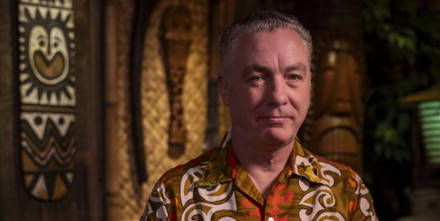
An Interview with Tiki Historian Tim ‘Swanky’ Glazner
Posted by Emily Roach on 8th Feb 2026
Picture the scene: it’s 1934. You’ve made it through World War One and enjoyed some prosperity in the previous decade, but now the Great Depression is in full swing. War is knocking at the door yet again, but for now what you need is escape. Escape from the drudgery of work (if you’re lucky enough to have any), escape from the squeeze of soaring prices, escape from the monotony of daily life itself.
There was one place you could go to truly forget your worries: a Polynesian pastiche paradise, right there on your doorstep. An exotic fantasy world of quirky cocktails, bamboo benches, and colourful Hawaiian shirts. With the opening of his first bar and restaurant in Hollywood, the eponymous Don the Beachcomber, Donn Beach’s immortal words were made manifest: "If you can't get to paradise, I'll bring it to you!". The escapist aesthetic he perfected—now known as Tiki culture—would define mid-century leisure, inspiring countless bars and restaurants, along with musicians and visual artists. The rest, as they say, is history.
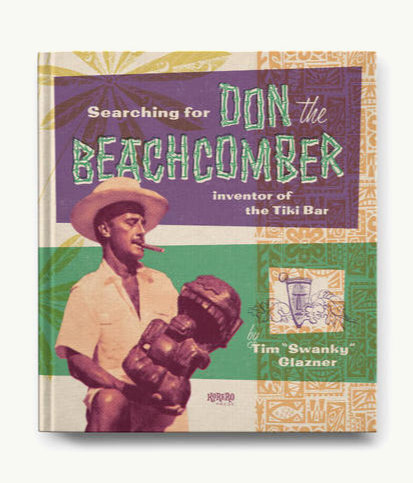
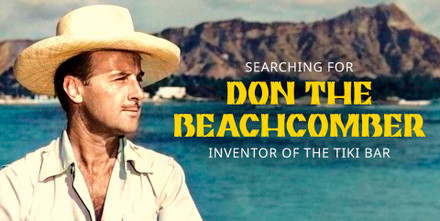
But just who was the man who started it all? Author and Tiki historian Tim ‘Swanky’ Glazner has sought to answer that very question with his upcoming release, Searching for Don the Beachcomber, currently raising funds on Kickstarter. I sat down with Tim to discuss the allure of this uniquely American culture, his journey meeting Beach's nearest and dearest, and the complex legacy of its founding figure
Let's start with your origin story. You're the founder of the Hukilau—how does one go from being a fan of Tiki and mid-century culture to creating such an event?
The age of mid-century discovery that was the 1980s and 1990s was a very exciting time. We’d grown up with the vestiges of that forward-looking and radically changing time all around us. Those giant, amazing cars were still on the roads, and the out-of-this-world architecture and ephemera was hanging on here and there. Thrift stores were full of inspiring furniture, clothes, and appliances from the '40s to the '60s and could be had for pocket change. The internet turned everyone’s little fetish or obsession into a community. We were all gathering together to share our exciting finds. And, as the saying goes, ‘if it’s 100 years old we save it, if it’s 50 years old we bulldoze it’ — that was the fate of the era. Only us kids cared about it. The Boomers were tearing it down.
Tiki was just one of my mid-century obsessions. Rockabilly, psychedelia, garage rock, big bands, jazz, exotica, and everything that went with it — from wardrobe to dinnerware — were part of my collections. After attending the Indy Rockabilly Rebel Weekender, I was sure hosting an event was in my future. I thought it would be a rockabilly event held at a nearby vintage motel and theatre or something along those lines. It turned out to be Hukilau, a Tiki weekender in Atlanta centred around the iconic restaurant Trader Vic’s.
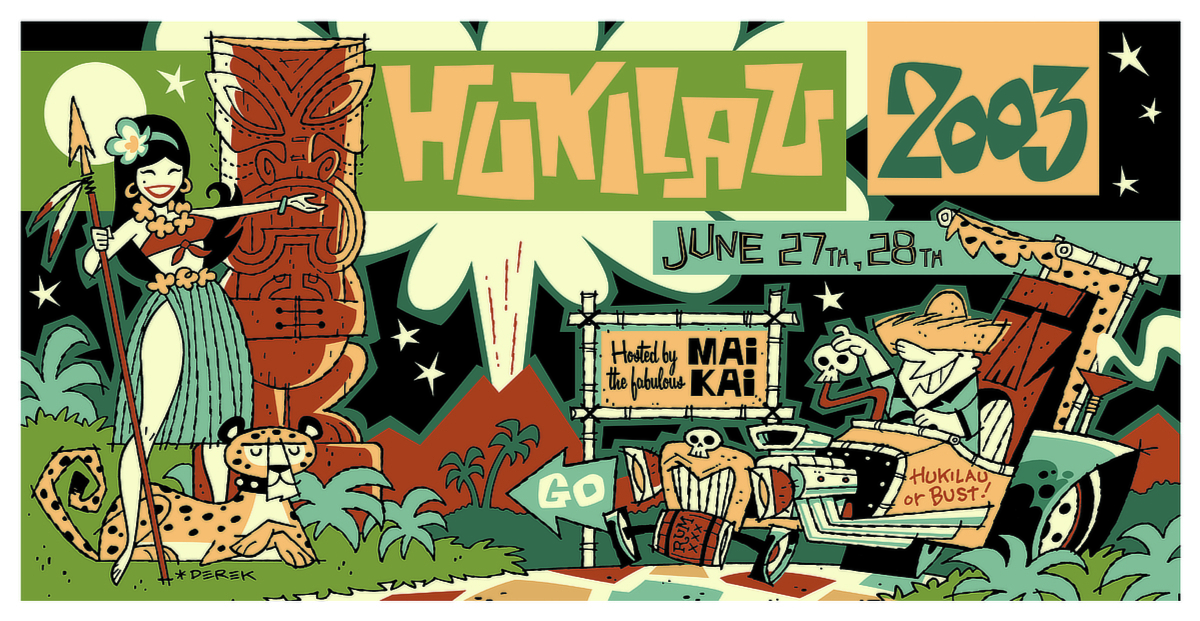
We didn’t expect hundreds of people to attend from all over the country. People flew in from California and drove up from Florida. There were so many people that Trader Vic’s had to shut the doors and turn crowds away. It was an instant phenomenon and was named the number one event of the year in Atlanta in 2002.
That’s quite a founding story. Shifting to the man himself, how did you first encounter Donn Beach? And what was it about him that compelled you to write this book?
Everyone who is into Tiki knows of Donn Beach. He is a mysterious and enigmatic figure—more myth than reality. I am one of many people fascinated by him, one of countless who have tried to dig into his story. I think I was both more tenacious than most and lucky enough to stumble into knowledge few others had.
I turned a big corner researching the history of the Mai-Kai. I discovered that all its founding staff had been stolen from Don the Beachcomber Chicago, and that every drink, menu item, and the whole inspiration came from there. But the key was finding out the first manager I spoke to wasn't just a longtime veteran of the Don the Beachcomber restaurants; he was Donn Beach’s best friend, Bob Van Dorpe. He was at his side when he passed and made his funeral arrangements. They worked together for decades. Through him, I had new, exciting insights and stories no one had ever heard outside of his closest friends.
That’s quite the discovery. Through Bob Van Dorpe, you got as close as anyone can to Donn Beach. How did those conversations transform the mythical figure into a real person for you?
Talking to Bob was like talking to Donn; he called them soul brothers. He was so enthusiastic and charismatic that I felt I got a sense of Donn through him. I'd ask questions, like ‘Did Donn create those drinks or was it the Filipino bartenders?’ You could hear the emotion in his voice. I heard the same in Karen Sund. These were people who had sat across from Donn making drinks! The wit, intelligence, and depth of Bob gave me a real taste of what Donn must have been like.
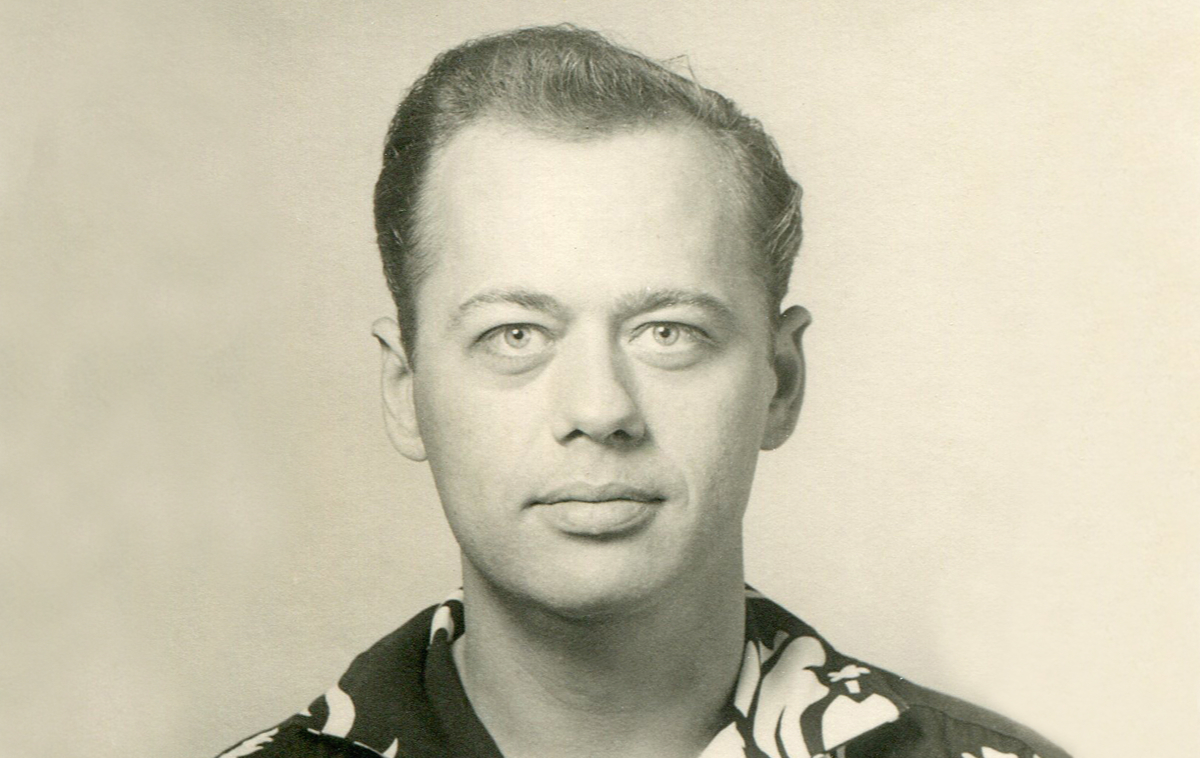
I went to Hawaii years after the Mai-Kai book to interview Bob in person for this project. Unfortunately, a few strokes and being nearly 90 had caught up with him, and he wasn’t fully the man I’d known before. We’d lost contact years earlier when he could no longer talk on the phone. But after about four hours of taping, as we were leaving the room, he said to me, ‘I’m glad you’re the one doing this.’ That broke me up. It meant a helluva lot. Bob had been the inspiration for all of it—this book, the documentary. He got me excited about it all. He had wanted to do a biography of Donn, and now I was doing it for him.
Once you had that initial lead from Bob Van Dorpe, where did the search go next? How did you build the network of people who knew Donn Beach personally?
Over the next decade, I connected with other people like Karen Sund, the daughter of Donn’s first wife, Sunny. She told me her mother’s story, and her own. I met Donn’s nephew, Paul, who worked with him for decades. And by way of Bob Van Dorpe’s daughter, I connected with Phoebe Beach, Donn’s widow, and managed to gain her trust. Donn’s family, friends, associates, and friends’ families all shared their memories. I slowly amassed as complete a picture as can be found at this point. I wasn’t sure there was a story to tell when I started. I feared I was just going to rehash what people mostly already knew. But an accidental find in a garage by Cindi Neisinger turned out to be the key to everything. There was a story here, not just a string of facts and compiled news articles. I had a real narrative.
You've had exclusive access to Beach's personal archive; what was the biggest surprise you found? Without giving too much away, of course. And what questions were left unanswered?
I was bursting with excitement when the archive arrived. I thought, this is it—the exclusive information that would blow the doors open. That was not it. There were hundreds of photos and thousands of documents, but as I dug through, I found only tantalising tidbits. No memoir. Nothing that fundamentally added to the story I already knew. In some ways, the most remarkable thing was the absence of deep insight. The archive didn't reveal inner struggles or hidden secrets. What it did give was evidence for things that had been mere myth. There were literal receipts!
The 1930s were a whirlwind of activity in which events happened that ruled his life until he died. There were trials and tribulations the likes of which few experience. But in his notes he scribbled down for a future autobiography, they barely covered a page. Sunny Sund is mentioned only once. In stark contrast, his war years filled many, many pages. If he ever wrote his story, it would have been largely consumed with his adventures in Europe during the war. He had no idea people today would be ravenous for his origin story. How did the bar start? Where did the cocktail ideas come from? What was his mob connection? How did Sunny gain control of his business?
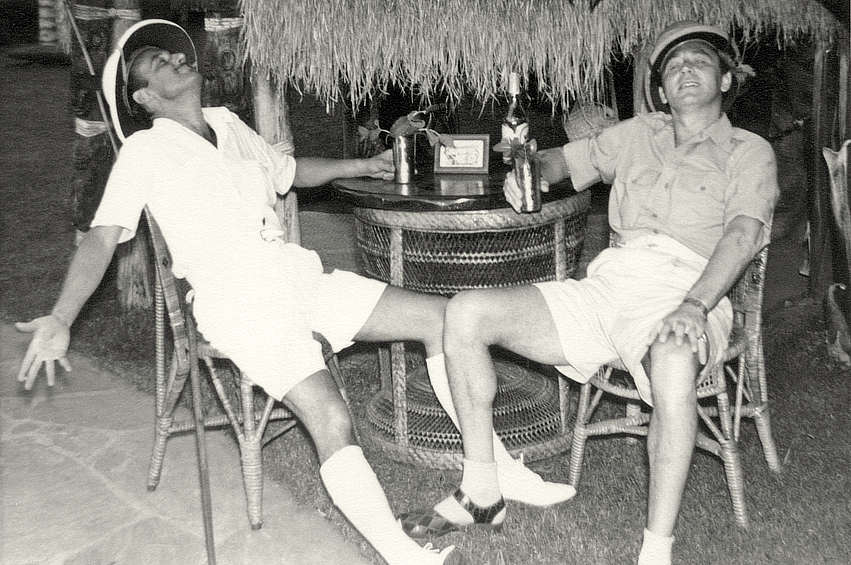
So, the archive left almost all the burning questions unanswered. What it did provide were important clues to his most closely held cocktail secrets—clues I’ve since turned into my own mixers—and a wealth of images that fill a visual void. The disconnect was striking: the things so important to me and Tiki fans today simply weren’t that important to Donn. Even his closest friends and family couldn’t answer them.
‘The things that were important to me and Tiki fans today, were not very important to Donn’ — this feels extremely resonant. How did you reconcile that much of Beach’s life is simply lost to time, and his particular truth with it?
It makes me sad to this day. For a while, I thought all I had were newspaper clippings and magazine stories—second- and third-hand stuff that was dull and lifeless. But I’m eternally grateful that I was able to pull together enough pieces to find the real story. And it is a great story. A true American original: a man from a town so small it no longer exists, who went on to influence the world for a century. Hollywood’s golden age, bootlegging, the mob, war, putting Hawaii on the map—it’s cinematic. I’m not sure he’d fully approve of telling his secrets, but it’s a story that’s going to make people love him more. He is a hero figure.
We may not fully understand the man himself, but the tangible work he created in his lifetime is plain for all to see. How would you quantify his impact on Tiki culture?
Tiki culture just wouldn’t exist without him. But I also think that the 2007 publication of the bulk of his secret cocktail recipes by Jeff Berry catapulted things forward. We finally understood what the master had created and why it was so copied. It inspired a whole new generation of bartenders who continue to discover and be awed by his genius.
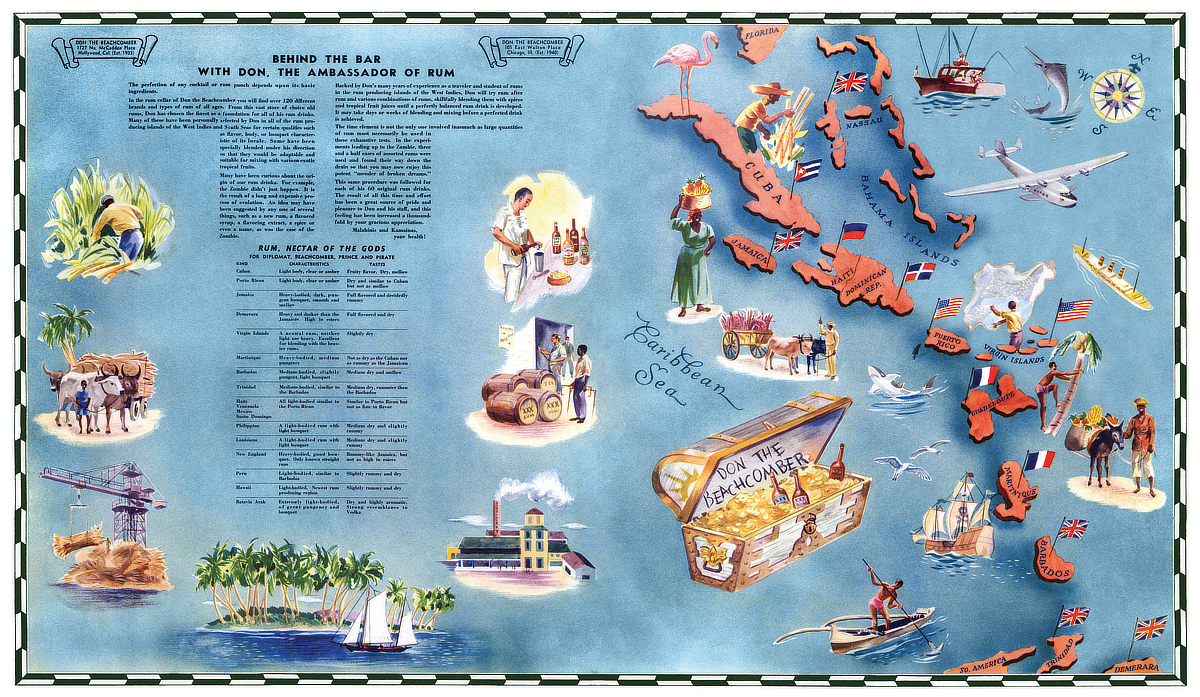
But his impact is way bigger than the Tiki community. He revolutionised mixology and put rum on the map. He pioneered this concept of themed dining that inspired all sorts of versions of his original. He brought Polynesia to the masses in a way that sparked the imagination and sent people to the islands themselves. He inspired a generation of musicians to greatness and popularity with Hawaiian music and exotica. His vision helped give a few tiny islands in the South Pacific a gigantic impact on American popular culture. You can trace so much of it straight back to him. He was the right beachcomber at the right time.
It’s Korero tradition to pitch your book at the end of an interview: so go on, give us the hard sell!
Donn lived a life of high adventure and earth-shattering betrayal. He moved between worlds: close friends with A-list celebrities and Hollywood executives one moment, a genuine friend to every regular person on the smallest South Pacific islands the next. His gourmet palate and boundless imagination created sensations in 1930 that still thrill today. He didn’t just create the fantasy; he lived the life others cosplay. He was the original ‘trader’ and ‘beachcomber’, forever taking the road less travelled. His is the stuff of legend, and the story does not disappoint. It’s the origin story of the entire Tiki world, but also a classic American tale of dream-chasing, told with vigour and heartache. Ultimately, it’s simply an inspiring story—whether you’ve ever set foot in a Tiki bar or visited the Islands or not.